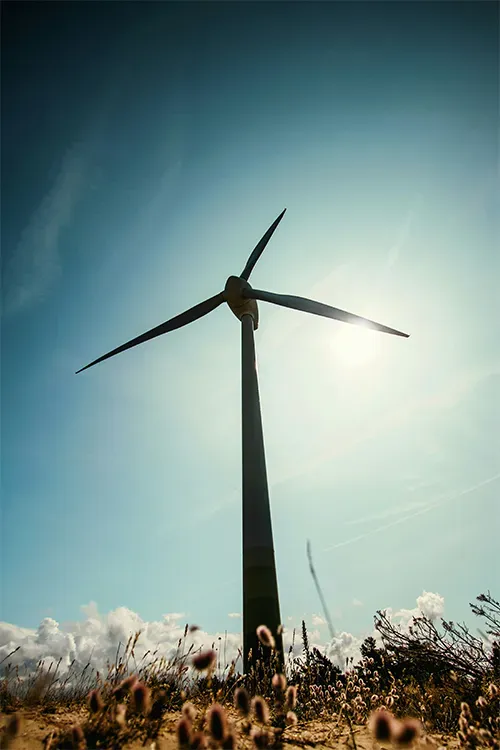
Onshore Wind Farm Planning and Environmental Consultancy
Specialist planning support for multi-turbine wind farms and single large-capacity turbines
Onshore wind is back on the UK's agenda. With planning reform opening the door to new projects in England, and ongoing activity across Scotland and Wales, developers are moving fast to bring sites forward. But wind remains one of the most scrutinised forms of renewable development, and getting consent takes a strategic, evidence-led approach. Engena provides end-to-end planning and environmental consultancy for onshore wind projects, from single-turbine community schemes to large multi-turbine developments. We've been consenting wind projects for over two decades, and we know what it takes to get them over the line.
What we mean by onshore wind development
Onshore wind covers a broad range of project types. At one end, multi-turbine wind farms generate significant power through arrays of turbines positioned to capture prevailing wind. At the other, large-capacity single turbines offer a viable route for landowners, businesses, or community groups with access to a high-wind site.
Both rely on the same core technology: aerodynamic blades, efficient generators, and careful siting to convert kinetic wind energy into electricity. The planning and environmental requirements, however, can vary significantly depending on scale, location, and turbine height.
Why onshore wind matters
Onshore wind is one of the cheapest and fastest forms of new electricity generation available in the UK. It plays a central role in meeting clean power targets, strengthening energy security, and reducing long-term consumer costs.
For landowners and communities, well-sited turbines can deliver meaningful income, local investment, and direct community benefits. For the wider grid, onshore wind offers reliable, scalable capacity that complements solar and storage.
How Engena supports wind developers
We work with wind developers, landowners, and community energy groups from initial feasibility through to planning determination and beyond. Our services across the wind sector include:
- Site appraisal and constraint mapping to assess viability early
- Environmental Impact Assessments (EIA) and Environmental Reports for smaller schemes
- Planning applications including full Design and Access Statements
- Landscape and Visual Impact Assessments (LVIA)
- Grid connection and DNO liaison support
- Public consultation and community engagement
- Appeals and planning refusal support
Whether you're developing a single 500kW turbine or a multi-turbine site of 50MW or more, our role is to anticipate the risks, build a robust case, and give your project the best possible chance of consent.
Key considerations for onshore wind development
Wind projects are among the most technically and politically complex in the renewables sector. The key factors we work through with clients include:
- Wind resource assessment and site suitability
- Landscape and visual impact, including ZTV and photomontages
- Noise and shadow flicker assessments
- Ecology, ornithology, and protected species
- Cultural heritage and setting of designated assets
- Grid connection timelines and capacity
- Community engagement and local planning policy
- Cumulative impact with nearby renewable developments
Wind consents are won or lost on the strength of the evidence and the quality of engagement. We identify constraints early, build strategies that address them head-on, and work closely with local communities and planning authorities throughout.
Talk to us about your wind project
If you're developing an onshore wind project and need planning or environmental support, we'd be glad to talk. From early-stage site appraisal to full EIA and appeal work, we can help move your project forward.

The Old Stables
Bosmere Hall
Creeting St Mary
Suffolk IP6 8LL
Company Number : 5382184
