Alternative Energy Planning and Environmental Consultancy
Specialist planning support for hydrogen, EV charging, and rapid response generation projects
Not every renewable project fits neatly into solar, wind, or battery. The energy transition is throwing up an increasingly diverse range of development types: green hydrogen production, commercial EV charging hubs, gas peaker plants, and other grid-support technologies that play a critical role in the wider system. Engena has worked across all of these. Our experience spans the full breadth of renewable and grid-support infrastructure, giving us the depth to advise on projects that don't always have clear planning precedent. Whatever your technology, our role is the same: identify the planning and environmental risks early, and build a strategy to consent them.
The technologies we cover
Green Hydrogen
Green hydrogen is emerging as a central part of the UK's decarbonisation strategy, particularly for heavy transport, industrial processes, and long-duration storage. Production typically involves using renewable electricity to split water into hydrogen and oxygen through electrolysis, with the hydrogen then compressed, stored, and transported to end users.
Engena has supported the early development of green hydrogen generation from solar power in the south west of England, where site electricity feeds an electrolyser producing hydrogen for offtake by HGV fuelling stations and other industrial users. Projects can also include on-site refuelling of hydrogen HGVs.
Key site considerations for hydrogen projects include:
- Access and HGV movement planning
- Waste water emissions and treatment
- Landscape and visual impact
- Noise from compression and electrolyser plant
- Ecology and protected species
- Integration with co-located generation
Commercial EV Charging Infrastructure
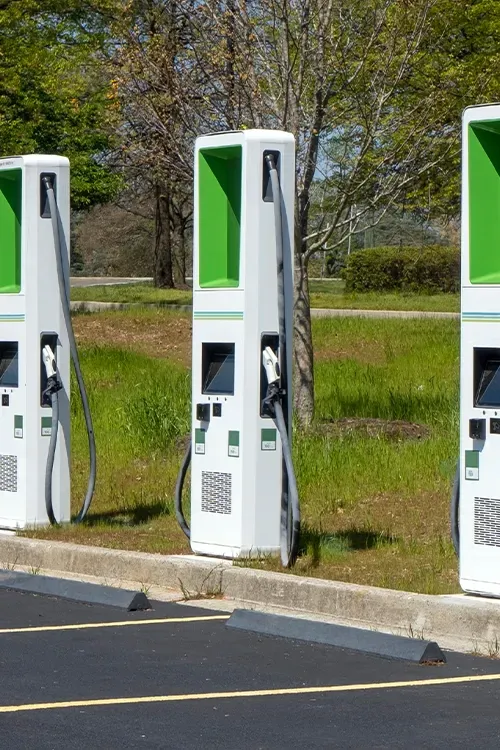
As EV adoption accelerates, so does demand for high-capacity charging infrastructure. Commercial EV charging hubs, particularly those co-located with renewable generation and driver amenities, are becoming a viable development type in their own right.
Engena has co-ordinated the development and consenting of commercial EV charging stations integrated with solar and wind energy hubs, where on-site generation feeds directly into the charging infrastructure. One of our consented sites hosted the EV Rally in July 2024 and now operates with integrated café facilities alongside the charging points.
Key site considerations for commercial EV charging include:
- Location and proximity to strategic road networks
- Traffic flow and junction design
- Grid connection capacity
- Integration with on-site renewable generation
- Visitor amenity planning
- Landscape and visual impact
Rapid Response Gas Generation
While the long-term direction is away from fossil fuels, rapid response gas generation continues to play a vital role in stabilising the grid. These projects provide power within minutes of a fault, demand spike, or shortfall in renewable generation, acting as a safety net for the wider system.
Engena has supported the development of multiple rapid response gas engine projects, typically located at strategic points on the grid. The spatial requirements of these sites are tight, and the planning constraints are significant.
Key site considerations for rapid response generation include:
- Green Belt and policy constraints
- Noise impact on nearby receptors
- Air quality and emissions management
- Ecology and biodiversity
- Heritage and setting of designated assets
- Landscape and visual impact
How Engena supports alternative energy projects
Our full-service planning and environmental offer applies across all these technologies:
- Site appraisal and constraint mapping
- Environmental Impact Assessments (EIA) and Environmental Reports
- Planning applications and Design and Access Statements
- Specialist environmental assessments (noise, air quality, ecology, heritage, landscape)
- Grid connection and DNO liaison support
- Public consultation and stakeholder engagement
- Appeals and planning refusal support
The technologies may differ, but the approach doesn't. We bring the same rigour, the same focus on evidence, and the same commitment to getting your project consented.
Talk to us about your alternative energy project
If you're working on a hydrogen, EV charging, rapid response generation, or other emerging renewable project, we'd be glad to talk. We have the experience to work across unusual or precedent-setting schemes, and the planning expertise to see them through to consent.

The Old Stables
Bosmere Hall
Creeting St Mary
Suffolk IP6 8LL
Company Number : 5382184
