Current data suggests that renewable energy uptake for businesses and farms across the UK has significantly increased in recent years. In March 2026 alone, installations of solar photovoltaic (PV) across the UK increased by 27 607[1], with the acceleration in March cited to be partly reactionary to the energy instability caused by the US-Iran conflict[2].
Between 2023 and 2024, the Department of Environment, Food and Rural Affairs reported that 32% of farm businesses[3] in England generate energy for their operations from some form of renewable energy[4]. The same report found that the reasons for installations across UK farm businesses were primarily because of the associated financial incentives, with 78% of adopters stating the reduction to energy costs as the main attributer, whilst 46% were motivated by the financial benefit of selling surplus energy, and 41% thought that it’s a necessary action to protect their business against future energy shocks.
This is because onsite energy generation from renewables provide the business operations with cheap electricity compared to the grid. In addition, more recent acceleration in uptake of similar schemes, may be attributed to the ability to supply a secure, stable and protected energy source, so that operations can continue regardless of current geopolitical affairs.
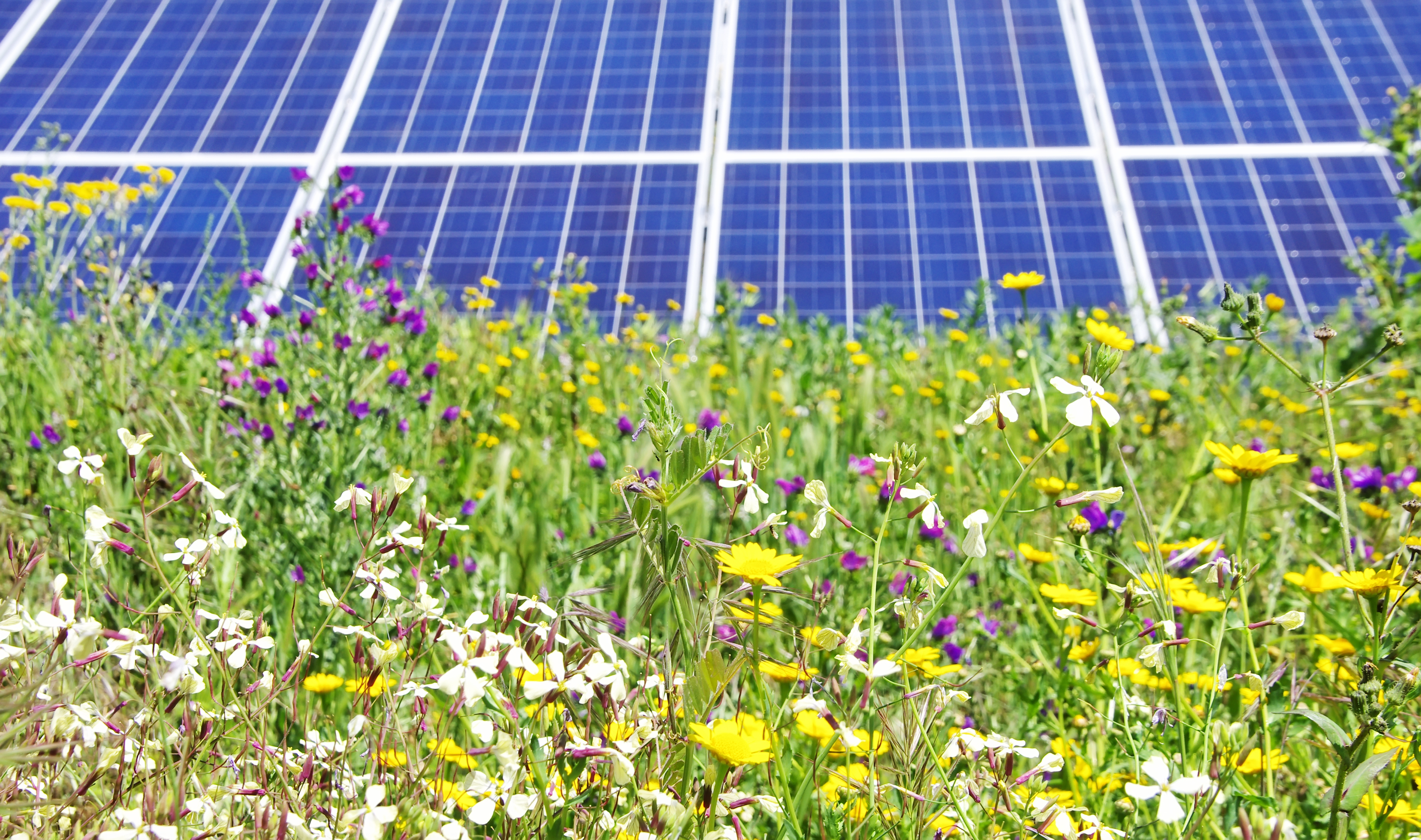
The highest share of renewable energy deployed by farm businesses was solar, which accounted for 27% of farm businesses, out of this, 84% installed solar on farm building rooftops, 11% installed solar on farmhouse rooftops and 10% installed solar arrays on land. Whilst currently the National Farmers Union advise for a rooftop first approach to protect fertile land and land availability[5][6], developments in solar such as agrivoltaics may influence how solar is deployed in the future, as agrivoltaics combine energy generation and agricultural production of the land to maximise the land output[7].
Solar well matches many farm load profiles such as chilled stores, or when combined with wind provide year-long flat power requirements.
The most common type of renewable adoption for farm businesses is solar PV mounted on rooftops, followed by solar mounted on ground and then wind turbines. All of which provide a source of energy, that is protected from geopolitical events and therefore energy price spikes. This is because when implemented for the operations, the renewable energy infrastructure will often connect behind the meter, or via a direct wire. Therefore, any energy generated by onsite renewables will contribute to the energy demand of the operations and any excess can be sold to the grid.
References and notes
[1] https://www.gov.uk/government/statistics/solar-photovoltaics-deployment
[2] https://www.gov.uk/government/news/britain-embraces-solar-revolution-following-war-in-iran
[3] Within the Farm Business Survey population
[4] https://www.gov.uk/government/statistics/energy-use-on-farms-in-england/energy-use-on-farms-in-england-202324
[5] https://www.nfuonline.com/media/ig2plmac/renewable-energy.pdf
[6] https://committees.parliament.uk/writtenevidence/114063/pdf/
[7] https://www.sciencedirect.com/science/article/pii/S1364032123011358